
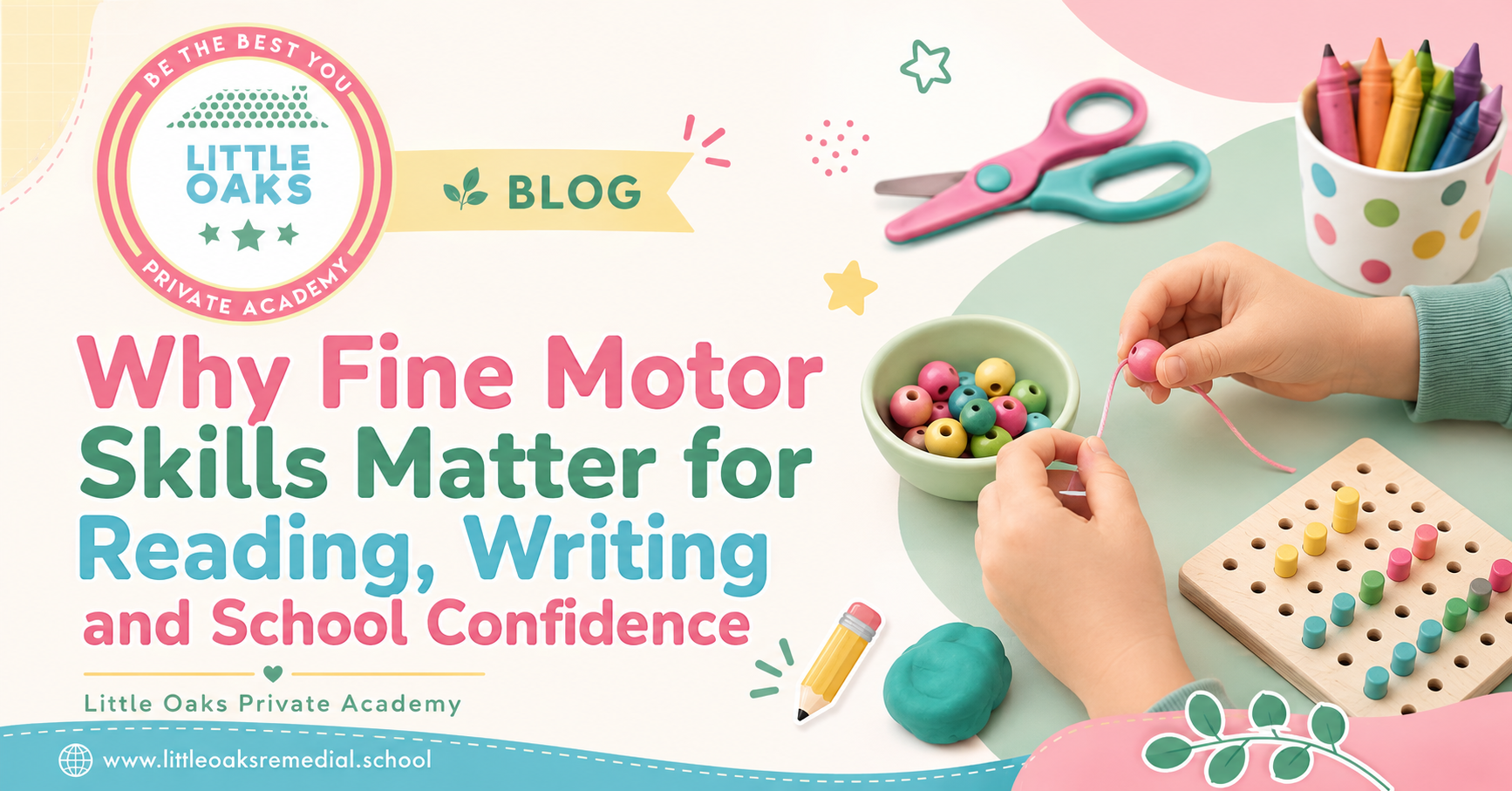
Why Fine Motor Skills Matter for Reading, Writing and School Confidence

Before a child writes neatly, cuts carefully, colours inside the lines or completes classroom tasks independently, they need something very important: strong fine motor skills.

Fine motor skills are the small movements children use in their hands, fingers and wrists. These skills help children hold a pencil, turn pages, use scissors, build puzzles, button clothing, open lunchboxes and complete many everyday school activities.

At Little Oaks Private Academy, we understand that learning does not begin only when a child opens a workbook. For junior learners, confidence is built through many small developmental steps. Fine motor development is one of those important foundations.

What are fine motor skills?

Fine motor skills involve the coordination of small muscles, especially in the hands and fingers. Children use these skills every day, often without realising it.

Fine motor skills help children:

  • Hold and control a pencil
  • Form letters and numbers
  • Cut with scissors
  • Use glue and craft materials
  • Build with blocks
  • Thread beads
  • Open and close containers
  • Tie shoelaces
  • Turn pages in a book
  • Complete puzzles
  • Colour, draw and trace

These activities may look simple, but they play a big role in school readiness and classroom confidence.

Why fine motor skills affect writing

Writing is more than putting letters on a page. A child needs hand strength, finger control, pencil grip, posture, coordination and concentration.

When fine motor skills are still developing, a child may find writing tiring or frustrating. They may press too hard, write very lightly, struggle to stay on the lines or avoid writing tasks altogether.

Parents may notice signs such as:

  • Complaining that their hand is sore
  • Avoiding colouring or writing
  • Struggling to hold a pencil correctly
  • Taking very long to complete written work
  • Writing letters unevenly
  • Becoming upset during homework
  • Struggling with scissors or craft tasks

This does not mean the child is lazy or not trying. It may simply mean their hands need more practice and support.

The link between fine motor skills and reading readiness

Fine motor skills do not only support writing. They also help with reading readiness.

When children point to words, turn pages, track lines, match letters, build puzzles or work with letter cards, they are using coordination, focus and visual tracking skills.

Activities that strengthen the hands often also build concentration, patience and problem-solving.

For younger learners, these skills work together. Stronger hands can support stronger classroom participation.

Confidence grows when children can do things independently

Children feel proud when they can complete small tasks by themselves.

Opening a lunchbox, packing away crayons, cutting out a picture or writing their own name may seem small to adults, but these moments can feel very big to a child.

Independence helps children feel capable.

When children struggle with basic classroom tasks, they may begin to feel embarrassed, frustrated or unsure of themselves. With the right support, they can grow stronger, more confident and more willing to try.

Fine motor development through play

One of the best ways to build fine motor skills is through play.

Children do not always need formal worksheets to strengthen their hands. Many fun, everyday activities can help.

Helpful fine motor activities include:

  • Playing with playdough
  • Threading beads
  • Building with blocks
  • Using tweezers or tongs
  • Tearing and pasting paper
  • Cutting with child-safe scissors
  • Colouring and drawing
  • Doing puzzles
  • Pegging clothes onto a line
  • Rolling, pinching and squeezing clay
  • Opening and closing containers
  • Sorting small objects
  • Painting with brushes or fingers

These activities build strength, control and coordination in a natural and enjoyable way.

How parents can support fine motor skills at home

Parents can support fine motor development through simple daily routines.

Try encouraging your child to:

  • Dress themselves where possible
  • Help pack their school bag
  • Open their own lunchbox
  • Pour water carefully
  • Use child-safe scissors
  • Draw or colour for fun
  • Help with simple baking tasks
  • Play with blocks, puzzles or beads
  • Practise writing their name
  • Use playdough to roll, pinch and shape

The goal is not perfection. The goal is practice.

Small daily opportunities can make a big difference over time.

When should parents be concerned?

Every child develops at their own pace. Some children naturally take longer to develop strong hand control and coordination.

However, if a child consistently avoids writing, becomes very upset during fine motor tasks, struggles far more than peers or finds daily classroom tasks difficult, it may be helpful to speak to the teacher.

Early support can prevent frustration from growing into low confidence.

The sooner children receive guidance, the easier it becomes to build the skills they need.

How Little Oaks supports junior learners

At Little Oaks Private Academy, we see each child as an individual. We understand that development happens in layers and that strong academic progress is often built on strong foundations.

In the junior phase, we value activities that support:

  • Fine motor development
  • Early writing confidence
  • Reading readiness
  • Independence
  • Concentration
  • Classroom participation
  • Emotional confidence
  • A love for learning

We believe children learn best when they feel safe, supported and encouraged.

Final thoughts

Fine motor skills may seem small, but they can have a big impact on a child’s school experience.

When children develop stronger hands, better control and more confidence, they are often more willing to write, draw, cut, create, participate and try new tasks.

Every small movement matters.

At Little Oaks Private Academy, we help junior learners build the foundations they need to grow with confidence, joy and independence.

Related Posts

Before a child writes neatly, cuts carefully, colours inside the lines or completes classroom tasks independently, they need something very important: strong fine motor skills.

Fine motor skills are the small movements children use in their hands, fingers and wrists. These skills help children hold a pencil, turn pages, use scissors, build puzzles, button clothing, open lunchboxes and complete many everyday school activities.

At Little Oaks Private Academy, we understand that learning does not begin only when a child opens a workbook. For junior learners, confidence is built through many small developmental steps. Fine motor development is one of those important foundations.

What are fine motor skills?

Fine motor skills involve the coordination of small muscles, especially in the hands and fingers. Children use these skills every day, often without realising it.

Fine motor skills help children:

  • Hold and control a pencil
  • Form letters and numbers
  • Cut with scissors
  • Use glue and craft materials
  • Build with blocks
  • Thread beads
  • Open and close containers
  • Tie shoelaces
  • Turn pages in a book
  • Complete puzzles
  • Colour, draw and trace

These activities may look simple, but they play a big role in school readiness and classroom confidence.

Why fine motor skills affect writing

Writing is more than putting letters on a page. A child needs hand strength, finger control, pencil grip, posture, coordination and concentration.

When fine motor skills are still developing, a child may find writing tiring or frustrating. They may press too hard, write very lightly, struggle to stay on the lines or avoid writing tasks altogether.

Parents may notice signs such as:

  • Complaining that their hand is sore
  • Avoiding colouring or writing
  • Struggling to hold a pencil correctly
  • Taking very long to complete written work
  • Writing letters unevenly
  • Becoming upset during homework
  • Struggling with scissors or craft tasks

This does not mean the child is lazy or not trying. It may simply mean their hands need more practice and support.

The link between fine motor skills and reading readiness

Fine motor skills do not only support writing. They also help with reading readiness.

When children point to words, turn pages, track lines, match letters, build puzzles or work with letter cards, they are using coordination, focus and visual tracking skills.

Activities that strengthen the hands often also build concentration, patience and problem-solving.

For younger learners, these skills work together. Stronger hands can support stronger classroom participation.

Confidence grows when children can do things independently

Children feel proud when they can complete small tasks by themselves.

Opening a lunchbox, packing away crayons, cutting out a picture or writing their own name may seem small to adults, but these moments can feel very big to a child.

Independence helps children feel capable.

When children struggle with basic classroom tasks, they may begin to feel embarrassed, frustrated or unsure of themselves. With the right support, they can grow stronger, more confident and more willing to try.

Fine motor development through play

One of the best ways to build fine motor skills is through play.

Children do not always need formal worksheets to strengthen their hands. Many fun, everyday activities can help.

Helpful fine motor activities include:

  • Playing with playdough
  • Threading beads
  • Building with blocks
  • Using tweezers or tongs
  • Tearing and pasting paper
  • Cutting with child-safe scissors
  • Colouring and drawing
  • Doing puzzles
  • Pegging clothes onto a line
  • Rolling, pinching and squeezing clay
  • Opening and closing containers
  • Sorting small objects
  • Painting with brushes or fingers

These activities build strength, control and coordination in a natural and enjoyable way.

How parents can support fine motor skills at home

Parents can support fine motor development through simple daily routines.

Try encouraging your child to:

  • Dress themselves where possible
  • Help pack their school bag
  • Open their own lunchbox
  • Pour water carefully
  • Use child-safe scissors
  • Draw or colour for fun
  • Help with simple baking tasks
  • Play with blocks, puzzles or beads
  • Practise writing their name
  • Use playdough to roll, pinch and shape

The goal is not perfection. The goal is practice.

Small daily opportunities can make a big difference over time.

When should parents be concerned?

Every child develops at their own pace. Some children naturally take longer to develop strong hand control and coordination.

However, if a child consistently avoids writing, becomes very upset during fine motor tasks, struggles far more than peers or finds daily classroom tasks difficult, it may be helpful to speak to the teacher.

Early support can prevent frustration from growing into low confidence.

The sooner children receive guidance, the easier it becomes to build the skills they need.

How Little Oaks supports junior learners

At Little Oaks Private Academy, we see each child as an individual. We understand that development happens in layers and that strong academic progress is often built on strong foundations.

In the junior phase, we value activities that support:

  • Fine motor development
  • Early writing confidence
  • Reading readiness
  • Independence
  • Concentration
  • Classroom participation
  • Emotional confidence
  • A love for learning

We believe children learn best when they feel safe, supported and encouraged.

Final thoughts

Fine motor skills may seem small, but they can have a big impact on a child’s school experience.

When children develop stronger hands, better control and more confidence, they are often more willing to write, draw, cut, create, participate and try new tasks.

Every small movement matters.

At Little Oaks Private Academy, we help junior learners build the foundations they need to grow with confidence, joy and independence.