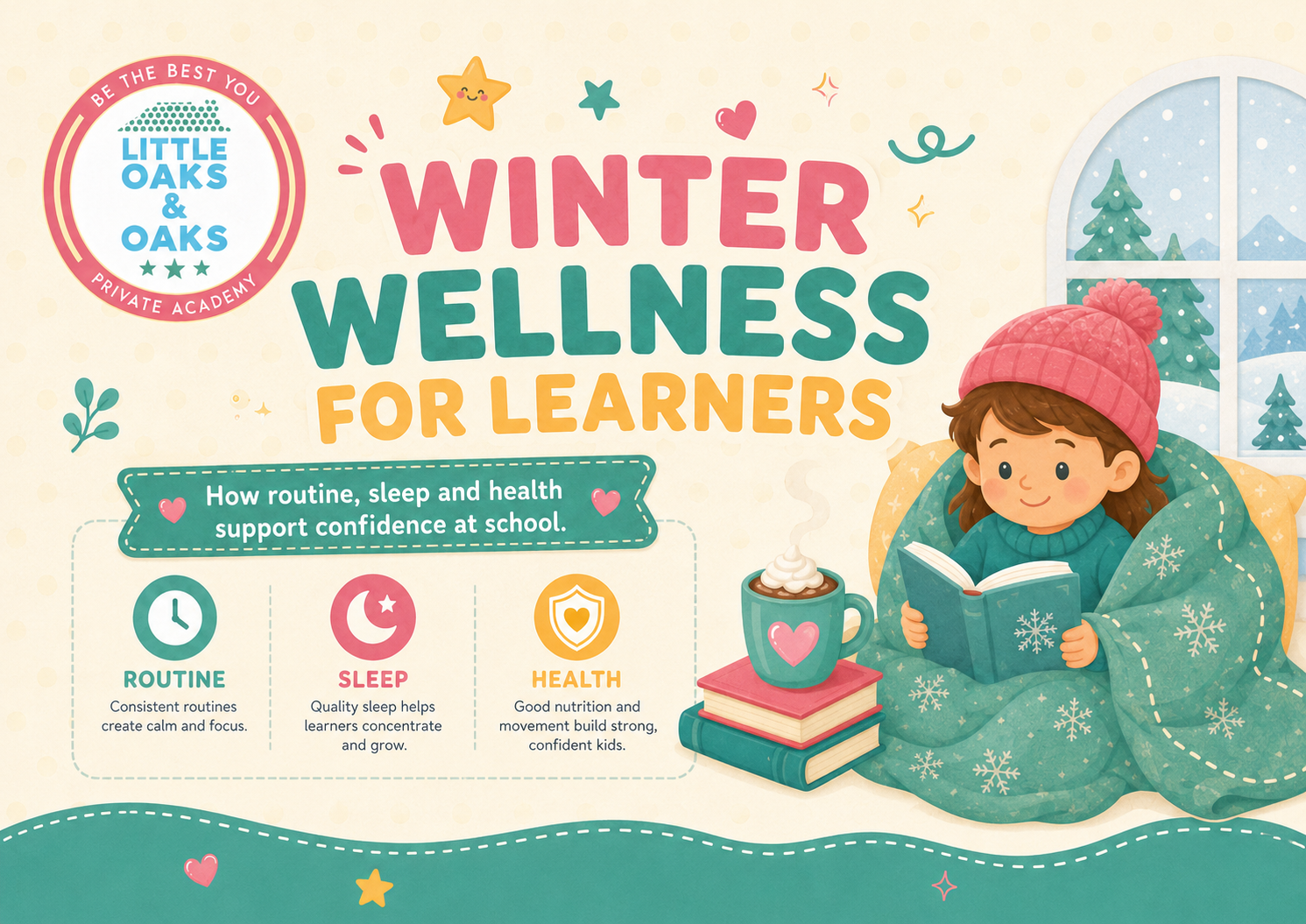
Winter can be a challenging season for families. Mornings are colder, children may feel more tired, and colds and flu can interrupt routines. For some learners, winter can also affect mood, focus, motivation and confidence.
At Little Oaks & Oaks Private Academy, we believe learning is not only about academics. A child’s wellbeing, routine, rest and emotional readiness all play an important role in how they cope at school.
When children feel healthy, rested and emotionally supported, they are more likely to participate, concentrate and approach learning with confidence.
Why winter routines matter
Children feel safer and more settled when they know what to expect. A consistent routine helps reduce stress, especially during the colder months when mornings can feel rushed and difficult.
Simple routines can make a big difference, such as:
- Packing school bags the night before
- Preparing uniforms or clothing before bedtime
- Keeping a regular sleep schedule
- Having a calm morning routine
- Making time for breakfast
- Allowing a few extra minutes to get ready
When children start the day calmly, they often cope better with the demands of learning.
Sleep and learning are closely connected
Sleep has a major impact on a child’s ability to focus, remember information and regulate emotions. A tired child may struggle to listen, complete tasks, follow instructions or manage frustration.
Parents may notice signs such as:
- Irritability
- Difficulty waking up
- Poor concentration
- Emotional outbursts
- Avoiding schoolwork
- Feeling overwhelmed quickly
Sometimes what looks like a lack of motivation is actually tiredness.
A regular bedtime routine can help children settle more easily. This could include switching off screens earlier, having a warm bath, reading quietly, preparing for the next day and keeping bedtime as consistent as possible.
Nutrition and hydration still matter in winter
During winter, children may drink less water because they do not feel as thirsty. However, hydration still supports focus, energy and general wellbeing.
Warm meals, healthy lunchboxes and balanced snacks can also help children maintain energy throughout the school day.
Helpful winter lunchbox ideas may include:
- Soup in a flask
- Wholegrain sandwiches
- Fruit
- Yoghurt
- Boiled eggs
- Cheese and crackers
- Water or diluted juice
- Warm oats or porridge before school
A child who is hungry, dehydrated or low on energy may find it harder to concentrate and stay emotionally regulated.
Emotional wellness during winter
Winter can make some children feel more withdrawn, tired or unmotivated. The colder weather and shorter days may affect their energy levels and mood.
Parents can support emotional wellness by checking in gently.
Try asking:
- How are you feeling about school this week?
- What was the best part of your day?
- Was anything difficult today?
- Is there anything you need help with?
- What would make tomorrow feel easier?
These small conversations can help children feel seen and supported.
When routine helps confidence grow
Confidence does not only come from good marks. It also grows when children feel prepared, supported and able to manage their day.
A child who arrives at school rested, calm and ready is more likely to try, ask questions and participate.
Healthy routines support:
- Better focus
- Better emotional regulation
- Improved confidence
- Better school attendance
- A more positive attitude toward learning
Small habits can lead to big changes over time.
How parents can support winter wellness at home
Here are a few practical ways parents can help:
- Keep bedtime and wake-up times consistent
- Prepare school items the night before
- Encourage warm, nourishing meals
- Limit screen time before bed
- Make mornings calm and predictable
- Watch for emotional changes
- Keep communication open with teachers
- Allow children time to rest and recover when they are unwell
It is not about creating a perfect routine. It is about creating a supportive one.
Final thoughts
Winter can be tough, but it can also be a season of care, connection and consistency.
When children are supported through healthy routines, enough rest and emotional reassurance, they are better able to cope with the school day and continue growing in confidence.
At Little Oaks & Oaks Private Academy, we understand that every child’s needs are different. We believe that when children feel safe, supported and prepared, they are more ready to learn, grow and become the best version of themselves.